
 |
 |  |  |  |  |
 |  |  |
- Share the positive experience of our cooperation and recommend us to your friends and acquaintances:


Thinners and Cleaners
Thinner, cleaner and solvent are three different things, and confusing them is the commonest beginner's mistake. A thinner lowers the viscosity of paint and leaves the binder intact – the paint stays coherent even heavily thinned. A cleaner does the opposite and dissolves the binder, which is what you want in an airbrush and a disaster on a model. White spirit belongs to neither: it is a solvent for enamels and oil paints and has no effect on acrylics.
What is in the category
| Thinning | 3rd Generation thinner, 100 ml for acrylic paints, varnishes and primers |
| Cleaning | Perfect Cleaner in 100 ml and 250 ml – for airbrushes, brushes and tools |
| Enamels and oils | White spirit, 100 ml for blending enamel effects and thinning oils |
| Additives | Flow Improver, 100 ml, which slows drying at the nozzle |
What to buy first
If you paint in acrylics and own an airbrush, you need a thinner and a cleaner – two bottles without which no airbrush lasts long. If you weather with enamels or oils, add white spirit; without it an enamel effect cannot be blended and the whole technique loses its point. Flow Improver comes third – it solves one specific problem, drying at the needle tip, which shows mainly on large areas and in warm weather.
Frequently asked questions
Is water not enough for thinning?
For a quick adjustment, yes. Thinned further, though, water breaks down the binder – the paint covers worse, breaks into patches and holds less well. For spraying and glazes, use thinner.
Can a cleaner be used to thin paint?
No. It dissolves the binder, so paint thinned with cleaner will not knit into a coherent film. They are two products with opposite purposes.
Will white spirit attack the acrylic under an enamel?
Not once the acrylic is dry – and that is what the whole enamel technique rests on. For certainty, lay matt varnish before the enamel layer.
What comes next?
Paints are in the AK 3rd Generation range, the ground comes from a primer and the finish from varnish. The brushes you will be cleaning are in the AK range.
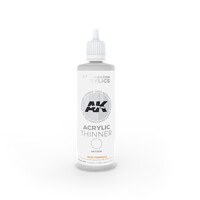
- AK 3rd Generation Thinner, 100 ml
- NOVINKA
- 5.95 €price
- Availabilityavailable
- Thinner for AK acrylic paints, 100 ml. For airbrush and brush, prevents drying in the nozzle.
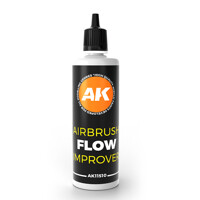
- AK Flow Improver for Acrylics, 100 ml
- 6.50 €price
- Availabilityavailable
- An additive that delays acrylic drying at the airbrush tip. One drop per five drops of paint. 100 ml.
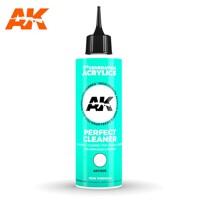
- AK Perfect Cleaner 3rd Generation, 250 ml
- NOVINKA
- 7.90 €price
- Availabilityavailable
- Cleaner for acrylic paint in airbrushes, brushes and tools. 250 ml with a controlled-dosing cap.
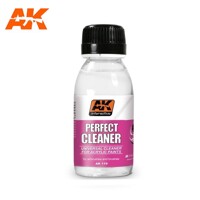
- AK Perfect Cleaner, 100 ml
- AKCIA
- -20%
- 4.70 €standard price3.76 €price
- Availabilityavailable
- Cleaner for acrylic paint in airbrushes and brushes, 100 ml. Also lubricates the needle during a break.
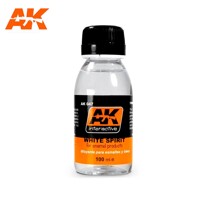
- AK White Spirit, 100 ml
- NOVINKA
- 5.95 €price
- Availabilityavailable
- White spirit for thinning and blending enamel and oil paints. 100 ml bottle.