 |
 |  |  |  |  |
 |  |  |
- Share the positive experience of our cooperation and recommend us to your friends and acquaintances:


AK Varnish
Varnish and cement are not what brings you into a model shop – but without them a model neither survives nor looks finished. Varnish unifies the sheen of every layer beneath it: paint, washes, oils and pigments each carry their own gloss, and until a varnish evens them out the model reads patchy however well it is painted. Cement decides whether a joint survives handling – and whether a part can still be nudged into place, or not.
What is in the category
| Varnishes, 100 ml | matt, satin, gloss and ultra matt – acrylic, for brush and airbrush |
| Cements, 40 ml | Quick Cement Extra Thin and Extra Thin Cement – both capillary, differing in set speed |
| Special | Gauzy Agent Glass Coat for clearing transparent parts |
Which varnish when
Gloss is not a final coat but an intermediate step: decals settle onto a smooth gloss surface without silvering and washes flow where they should. Matt is the standard finish for figures and vehicles alike. Satin suits surfaces with a slight sheen – leather, varnished wood, modern vehicles. Ultra matt leaves no sheen at all and takes 12 hours to cure.
The usual sequence is gloss varnish → decals → washes and oils → matt varnish. It sounds like a lot of layers, but each has a reason; without them the weathering either does not hold or cannot be blended.
Frequently asked questions
Why varnish both before and after weathering?
A varnish under an enamel layer separates it from the acrylic, so the effect can be blended or wiped off with white spirit without harming the paint. A varnish after weathering seals the work and unifies the sheen.
What is the difference between Quick and Extra Thin cement?
Set speed. Quick grabs almost instantly and holds hardest – for small parts and joints with little contact area. Extra Thin gives more time to adjust, which matters on longer seams.
Do these cements bond resin and metal?
No. They are plastic cements – they attack polystyrene chemically and weld it. Resin, metal and photo-etch need cyanoacrylate or epoxy.
What comes next?
The ground comes from a primer, paints from the AK 3rd Generation range, and thinning and cleaning from Thinners and Cleaners.
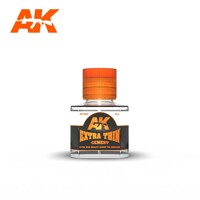
- AK Extra Thin Cement – Capillary Cement, 40 ml
- 4.50 €price
- Availabilityavailable
- Capillary cement for plastic models, medium-fast drying, 40 ml. Ultra-thin brush and a stable square bottle.
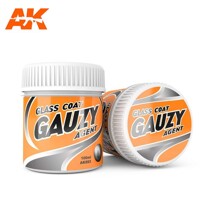
- AK Gauzy Agent Glass Coat, 100 ml
- 6.50 €price
- Availabilityout of stock
- A product for perfectly clear glass on transparent parts. Dip the part and let it dry. 100 ml.
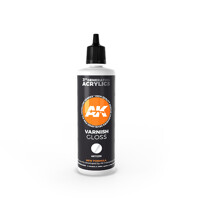
- AK Gloss Varnish, 100 ml
- NOVINKA
- 7.95 €price
- Availabilityavailable
- Acrylic gloss varnish for figures and vehicles, 100 ml. Brush or airbrush.
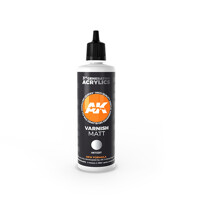
- AK Matt Varnish, 100 ml
- NOVINKA
- 7.95 €price
- Availabilityout of stock
- Acrylic matt varnish for figures and vehicles, 100 ml. Brush or airbrush.
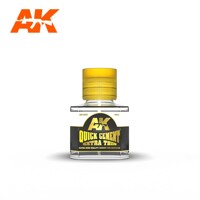
- AK Quick Cement Extra Thin – Capillary Cement, 40 ml
- 4.50 €price
- Availabilityavailable
- Capillary cement for plastic models, very fast drying, 40 ml. Ultra-thin brush and a stable square bottle.
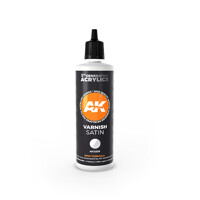
- AK Satin Varnish, 100 ml
- NOVINKA
- 7.95 €price
- Availabilityavailable
- Acrylic satin varnish for figures and vehicles, 100 ml. Brush or airbrush.
- AK Ultra Matt Varnish, 100 ml
- NOVINKA
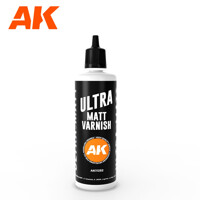
- 7.95 €price
- Availabilityout of stock
- Acrylic ultra matt varnish for figures and vehicles, 100 ml. Brush or airbrush.