
 |
 |  |  |  |  |
 |  |  |
- Share the positive experience of our cooperation and recommend us to your friends and acquaintances:


Weathering Effects
Weathering effects are enamel products that do one thing acrylic cannot: they can still be blended after they go on. Apply the effect, leave it ten minutes to set, then work it with a brush damped in white spirit until a hard mark becomes a soft transition. That ability to correct is why streaks, dust and filters are done in enamels rather than paint – and why a matt varnish goes underneath to separate the enamel from the acrylic.
What is in the category
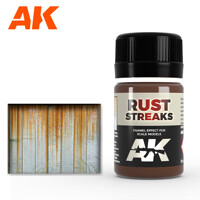
| Streaks | Streaking Grime for brown grime trails and Rust Streaks for ginger ones |
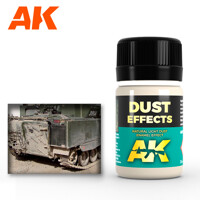
| Dust | Dust Effects for deposits on wheels, tracks and lower hulls |
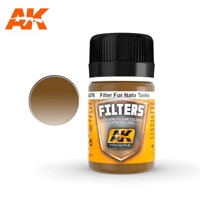
| Filters | a dark brown filter for green and NATO vehicles |
| Stamps | German wartime boot prints – four pieces for pressing and printing |
The order of work
The sequence is settled and it has a logic. The filter comes first – a very thin paint over the whole surface that shifts the tone by a shade and removes the look of uniform plastic. Then streaks, top to bottom, where water runs down the surface. Finally dust, bottom upward, where it would really settle. Every step is blended with white spirit and left to dry before the next.
One rule is worth keeping: less is more. A streak still clearly visible after blending is probably too strong. Real grime on a vehicle is almost unobtrusive – you see it only when you look for it.
Frequently asked questions
Why varnish under the enamel?
Varnish separates the enamel layer from the acrylic paint. That lets the effect be blended or wiped off entirely with white spirit without harming the paint beneath. Without varnish you risk lifting paint while blending.
How long should an effect set before blending?
About ten minutes. Sooner and it wipes away, later and it will not move. Warmth shortens the window, so on a larger model work section by section.
How do these differ from pigments?
An enamel is paint – it forms a layer and holds on its own once dry. A pigment is powder that catches in the texture and wipes off without a fixer. Most models use both: enamels for streaks and transitions, pigments for dust and mud with volume.
What else do I need?
White spirit – enamel work is impossible without it. Then matt varnish, pigments and a flat brush from the AK range.
- AK Dust Effects – Enamel Effect, 35 ml
- 3.60 €price
- Availabilityavailable
- Enamel effect Dust Effects for vehicle weathering, 35 ml. Blended out with white spirit into a soft transition.
- AK Filter for NATO and Green – Enamel Effect, 35 ml
- 3.60 €price
- Availabilityavailable
- Enamel effect Filter for NATO and Green for vehicle weathering, 35 ml. Blended out with white spirit into a soft transition.
- AK Rust Streaks – Enamel Effect, 35 ml
- 3.60 €price
- Availabilityout of stock
- Enamel effect Rust Streaks for vehicle weathering, 35 ml. Blended out with white spirit into a soft transition.
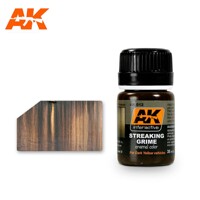
- AK Streaking Grime – Enamel Effect, 35 ml
- 3.60 €price
- Availabilityavailable
- Enamel effect Streaking Grime for vehicle weathering, 35 ml. Blended out with white spirit into a soft transition.
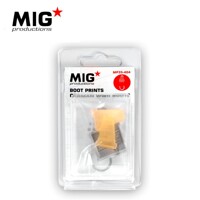
- Boot Print Stamps – German WWII Boots, 4 pcs
- 9.90 €price
- Availabilityout of stock
- Four stamps for pressing and printing German wartime boot prints into diorama groundwork.