 |
 |  |  |  |  |
 |  |  |
- Share the positive experience of our cooperation and recommend us to your friends and acquaintances:


Pigments
Pigment is the subtlest weathering tool there is. It is not paint – it is powder that catches in the texture of a surface exactly the way real dust does. That is why it reads naturally where painted grime would read as painted. The category holds eleven AK Interactive shades, two Abteilung 502 effect pigments and three products that fix the pigment or turn it into mud.
What is in the category
| Dust | light dust and North Africa dust |
| Earth | European, dark, Vietnam, Middle East and burnt umber |
| Rust | light rust and burnt rust red |
| Other shades | white ashes, faded green, and the Abteilung 502 effect colours Plasma Burn and sulfur yellow |
| Fixing and mud | AK048 Pigment Fixer, the Abteilung fixer and acrylic resin for thick mud |
How to work with pigments
There are two modes. Dry, the pigment goes on with a brush and can be moved and wiped until you are satisfied – and only then fixed. That is the way for dust, light soiling and shading. Wet, the pigment is mixed straight into fixer or white spirit and laid on as a thin slurry; that is how mud in recesses, deposits around wheels and running water marks are made.
One rule always holds: never a single shade. Real grime is never one colour, and two earth pigments mixed in different ratios at different places on a model do more than any technique with one. If you are starting out, buy European earth, light dust and the fixer – those three cover most models.
Frequently asked questions
Why does pigment darken when fixed and then lighten again?
Wet powder refracts light differently. Once fully dry the shade returns to its original dry colour. So never adjust the amount of pigment while the surface is still damp.
Can AK and Abteilung pigments be mixed?
Yes. They are powder pigments on the same principle, so they layer and blend together and take the same fixer.
How do they differ from liquid pigments and washes?
Liquid products go on at a fixed ratio and dry as a layer. Powder is dosed by you and sits on the surface as a deposit, so it can be built up and removed locally. For fine dust, powder has no substitute.
What else do I need?
Groundwork from the Textures category, vegetation from Vegetation, and brushes – an older, stiffer brush from the AK range suits pigment work.
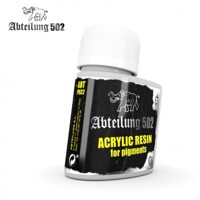
- Abteilung 502 Acrylic Resin
- 5.75 €price
- Availabilityavailable
- Abteilung 502 acrylic resin for mixing thick mud from pigments and plaster. Dries slowly and holds its shape.
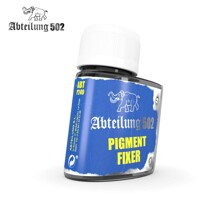
- Abteilung 502 Pigment Fixer
- 5.75 €price
- Availabilityavailable
- Abteilung 502 pigment fixer for a permanent hold. Grips harder, for models that get handled.
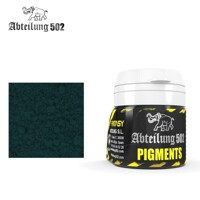
- Abteilung 502 Plasma Burn, 20 ml
- 4.15 €price
- Availabilityavailable
- Abteilung 502 effect pigment in plasma burn, 20 ml. An organic, non-toxic range continuing MIG Productions.
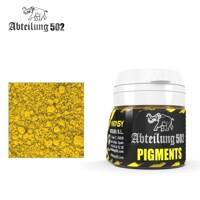
- Abteilung 502 Sulfur Yellow, 20 ml
- 4.15 €price
- Availabilityout of stock
- Abteilung 502 effect pigment in sulfur yellow, 20 ml. An organic, non-toxic range continuing MIG Productions.
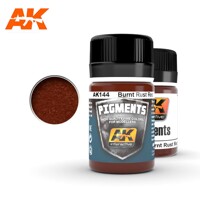
- AK Pigment – Burnt Rust Red, 35 ml
- -1%
- 3.75 €standard price3.70 €price
- Availabilityavailable
- Ultrafine modelling pigment in burnt rust red, 35 ml. Applied dry or wet, fixed with fixer or white spirit.
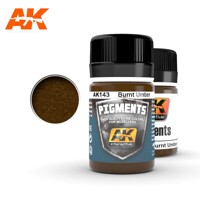
- AK Pigment – Burnt Umber, 35 ml
- -5%
- 3.60 €standard price3.40 €price
- Availabilityavailable
- Ultrafine modelling pigment in burnt umber, 35 ml. Applied dry or wet, fixed with fixer or white spirit.
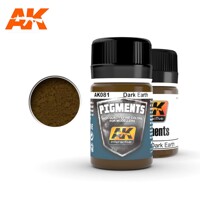
- AK Pigment – Dark Earth, 35 ml
- -5%
- 3.60 €standard price3.40 €price
- Availabilityavailable
- Ultrafine modelling pigment in dark earth, 35 ml. Applied dry or wet, fixed with fixer or white spirit.
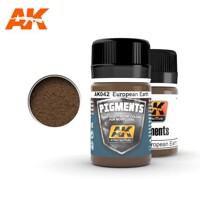
- AK Pigment – European Earth, 35 ml
- -5%
- 3.60 €standard price3.40 €price
- Availabilityavailable
- Ultrafine modelling pigment in european earth, 35 ml. Applied dry or wet, fixed with fixer or white spirit.
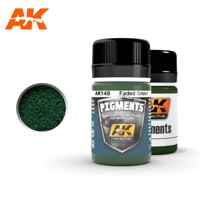
- AK Pigment – Faded Green, 35 ml
- -5%
- 3.60 €standard price3.40 €price
- Availabilityavailable
- Ultrafine modelling pigment in faded green, 35 ml. Applied dry or wet, fixed with fixer or white spirit.
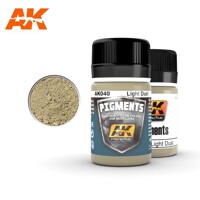
- AK Pigment – Light Dust, 35 ml
- -5%
- 3.60 €standard price3.40 €price
- Availabilityavailable
- Ultrafine modelling pigment in light dust, 35 ml. Applied dry or wet, fixed with fixer or white spirit.
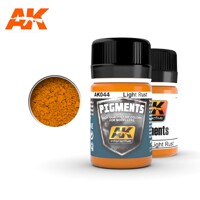
- AK Pigment – Light Rust, 35 ml
- -1%
- 3.75 €standard price3.70 €price
- Availabilityavailable
- Ultrafine modelling pigment in light rust, 35 ml. Applied dry or wet, fixed with fixer or white spirit.
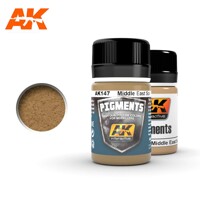
- AK Pigment – Middle East Soil, 35 ml
- -5%
- 3.60 €standard price3.40 €price
- Availabilityavailable
- Ultrafine modelling pigment in middle east soil, 35 ml. Applied dry or wet, fixed with fixer or white spirit.