 |
 |  |  |  |  |
 |  |  |
- Share the positive experience of our cooperation and recommend us to your friends and acquaintances:


Vegetation
Vegetation is what brings a base to life. A painted figure on a brown board is a model; the same figure in grass, with a weed at the boot and a few leaves on the ground, is a scene. This category collects everything such a scene is made of – static grass, tufts, scale leaves, shrubs, laser-cut plants and natural material. Most of it goes on in minutes and the difference shows at once.
What is in the category
| Static grass | five seasonal shades with 2 mm fibres – spring, summer, early fall, late fall and dry |
| Grass tufts | self-adhesive clumps in 2 mm, 4 mm and 10 mm heights |
| Scale leaves | oak autumn, oak late autumn and maple autumn, plus a punch for making your own |
| Shrubs and plants | spring green and blooming yellow shrubberies, laser-cut ferns |
| Natural material | dried sea grass and a preservative for real plants |
How to work
The order is nearly always the same and three steps are enough. Area first: static grass sprinkled onto thinned PVA covers most of a base. Then points: tufts go where a weed would actually grow – at the foot of a wall, between stones, under a wheel. Details last: a few leaves, one fern, a scrap of dry grass. Those final three seconds of work make the biggest difference of all.
If you are starting out, two things are enough: one static grass in a summer shade and one sheet of tufts. Those two cover most bases. Leaves, shrubs and ferns are what finish a particular scene.
Frequently asked questions
What is the difference between static grass and tufts?
Static grass is sprinkled over an area and makes continuous grass cover. A tuft is a ready-made clump on a self-adhesive backing, placed spot by spot. A good base carries both – grass as the field, tufts as the irregularity.
How do I keep it from looking artificial?
Do not use a single shade. Two static grasses roughly mixed, tufts from a different season, a few extra leaves – and the surface stops reading as a carpet. Naturalness comes from irregularity, not from the quality of any one product.
Can vegetation be painted once laid?
Yes, but only with an airbrush and heavily thinned paint. A brush lays the fibres flat. A light pass of ochre or brown from above unifies the whole scene and removes the factory look.
What else do I need?
Groundwork under the vegetation – earth and sand pastes from the Textures category, dust and dirt from Pigments. Tools for the work are in Tools and Accessories.
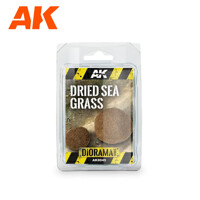
- AK Dried Sea Grass
- NOVINKA
- 3.95 €price
- Availabilityout of stock
- Natural dried sea grass for dioramas – dry vegetation, undergrowth and a base layer for denser planting.
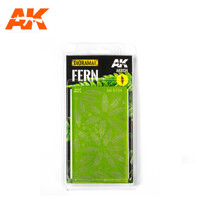
- AK Fern 1:32 and 1:35 – Laser-Cut Plants
- 6.90 €price
- Availabilityavailable
- Laser-cut scale ferns for 1:32 and 1:35. The most detailed plants available, fixed with PVA.
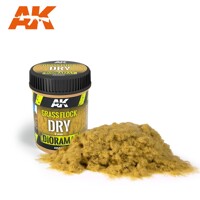
- AK Grass Flock 2 mm – Dry
- NOVINKA
- 5.90 €price
- Availabilityavailable
- Static grass with 2 mm fibres in the dry shade. Nylon flock for bases and dioramas from 25 mm upwards.
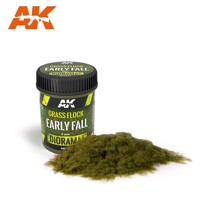
- AK Grass Flock 2 mm – Early Fall
- NOVINKA
- 5.90 €price
- Availabilityavailable
- Static grass with 2 mm fibres in the early fall shade. Nylon flock for bases and dioramas from 25 mm upwards.
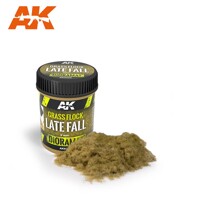
- AK Grass Flock 2 mm – Late Fall
- NOVINKA
- 5.90 €price
- Availabilityavailable
- Static grass with 2 mm fibres in the late fall shade. Nylon flock for bases and dioramas from 25 mm upwards.
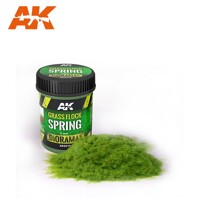
- AK Grass Flock 2 mm – Spring
- NOVINKA
- 5.90 €price
- Availabilityavailable
- Static grass with 2 mm fibres in the spring shade. Nylon flock for bases and dioramas from 25 mm upwards.
- AK Grass Flock 2 mm – Summer
- NOVINKA
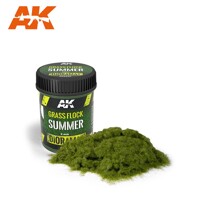
- 5.90 €price
- Availabilityavailable
- Static grass with 2 mm fibres in the summer shade. Nylon flock for bases and dioramas from 25 mm upwards.
- AK Grass Tufts 10 mm – Light Green
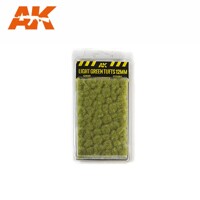
- 7.90 €price
- Availabilityout of stock
- Self-adhesive grass tufts 10 mm tall in light green. Lift with tweezers and place on the base.
- AK Grass Tufts 2 mm – Light Green
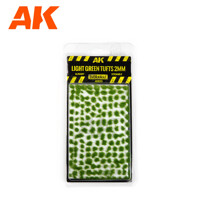
- 7.90 €price
- Availabilityavailable
- Self-adhesive grass tufts 2 mm tall in light green. Lift with tweezers and place on the base.
- AK Grass Tufts 2 mm – Summer Green
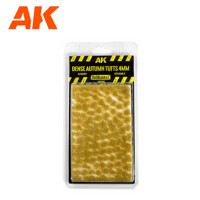
- 6.90 €price
- Availabilityout of stock
- Self-adhesive grass tufts 2 mm tall in summer green. Lift with tweezers and place on the base.
- AK Grass Tufts 4 mm – Dense Autumn
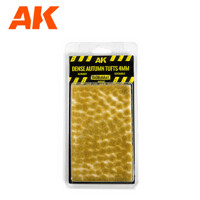
- 7.90 €price
- Availabilityavailable
- Self-adhesive grass tufts 4 mm tall in dense autumn. Lift with tweezers and place on the base.
- AK Natural Leaves & Plants Preservative, 250 ml
- NOVINKA
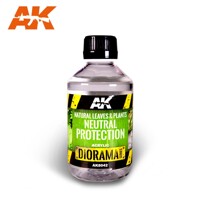
- 9.90 €price
- Availabilityout of stock
- Preservative solution for natural plants in dioramas. Replaces the sap and stops withering. 250 ml.